

TECH
Zeodration is a new, more sophisticated alternative to existing drying procedures for natural products such as fruits, vegetables, aromatic herbs, flowers, algae, and mushrooms, among others.
During the drying procedure, the product is not exposed to extreme temperature conditions (freezing or contact with hot air), which preserves 100% of its molecular structures. This concentrates the integrity of active ingredients such as vitamins, antioxidants, and phytonutrients.
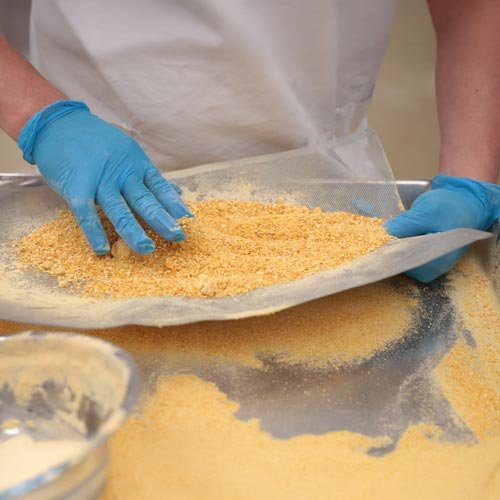
Sifting zeodrated pineapple in the plant.
Differences over Dehydration and Freeze-Drying
Since the product is not exposed to extreme temperatures (freezing or hot air), its cellular structures, as well as its organoleptic properties (flavor, color, aroma), are 100% preserved.
Zeodration has a very important advantage over freeze-drying. During the freezing process of freeze-drying, ice crystals penetrate the cell wall. Zeodration eliminates this degradation, preventing damage to the molecular structure.
Better Features
- Quick removal of water without cooking or oxidation.
- he closed system prevents the loss of volatilized active compounds.
- It’s a green technology; it doesn’t require the combustion of fossil fuels or the use of highly polluting synthetic gases to dry products.
- MaExtended shelf life due to very low water activity, eliminating the need for added preservatives or sugars.
- Preservation of sensitive bioactive compounds (vitamins, enzymes, antioxidants).
- Prevents the structural collapse of the product (no excessive shrinkage).
- Maintains organoleptic properties (original color, aroma, and flavor).
- BLow energy consumption (compared to freeze-drying).
APLICATIONS
- Functional foods and nutraceuticals
- Medicinal plant extracts
- High-quality dehydrated fruits and vegetables
- Sensitive pharmaceutical products
- Cosmetic industry (botanical extracts)